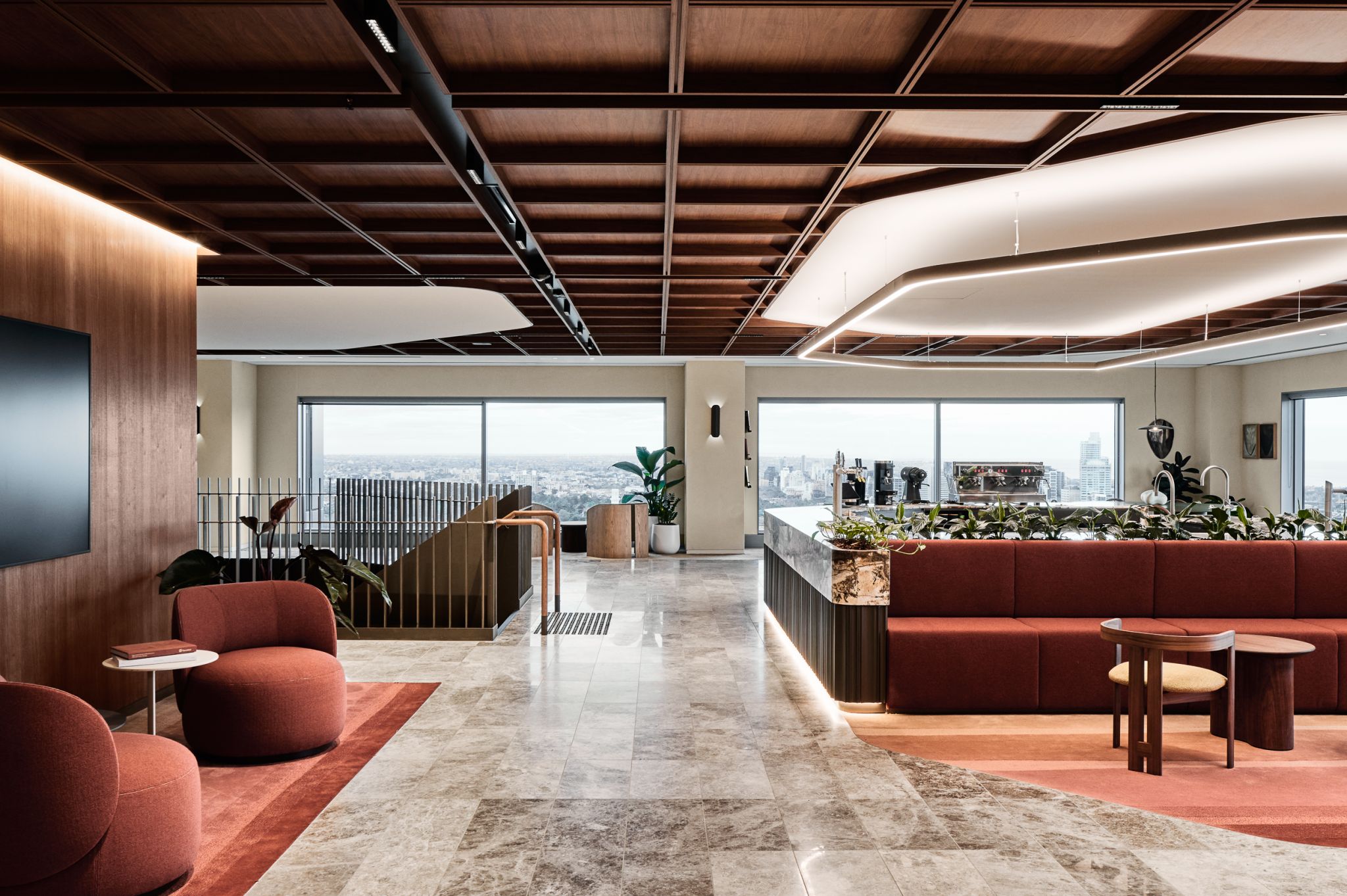
Durable commercial flooring installed in a completed workplace fit-out
Specifier guides · 6 min read

Durable Commercial Flooring

A specifier's comparison of carpet tile, LVT, Comcork and sheet vinyl, with every product-specific claim linked back to the manufacturer's own published material.

Why this guide

Pick the floor that survives the next fit-out cycle

This is a specifier's overview of the four commercial floor finishes we install most often on Australian projects, carpet tile, LVT, Comcork and sheet vinyl. The goal isn't to rank materials in the abstract; it's to point you at the right manufacturer's technical documentation for the decision you actually have to make.

Every product-specific claim below (warranty, wear-layer, slip rating, cleaning procedure, environmental certification) belongs to the manufacturer. Where we cite a specific number, we link the source directly, full source list at the bottom of the page.

Material comparison

Four options for high-traffic sites

Commercial carpet tile

Modular, worn tiles can be swapped individually
Best for

Open-plan offices, meeting rooms, education corridors

Durability

Modular carpet tile is designed for individual tile replacement in wear zones, Interface, Shaw Contract, Tarkett and Milliken all publish this as a core benefit of the format. The performance you actually get depends on the specific product's published warranty, backing system and traffic-class rating, always work from the manufacturer's current technical datasheet.

Maintenance

Follow the manufacturer's published maintenance guide for your specific range. As a general pattern, commercial carpet tile programs combine regular vacuuming with periodic deeper cleaning; the exact chemistry and frequency belong to the manufacturer's technical documents, not to a generic rule of thumb.

LVT (luxury vinyl tile / plank)

Wear-layer thickness varies by range, check the datasheet
Best for

Retail, hospitality, healthcare, workplace breakout zones

Durability

Karndean, Tarkett, Forbo, Polyflor and Armstrong Flooring all publish LVT ranges with different wear-layer thicknesses and traffic classes for residential, light-commercial and heavy-commercial use. Match the range to the actual traffic class of your space using the manufacturer's published rating rather than a generic minimum.

Maintenance

Each LVT manufacturer publishes a cleaning and maintenance guide specific to their finish (PU, PUR, factory coating vs. site-sealed). Use that document, not a generic vinyl regime, so warranty conditions aren't voided.

Comcork (Australian cork & rubber flooring)

10-year commercial warranty (source: comcorkflooring.com.au)
Best for

Workplace, education, wellness spaces, allied health rooms

Durability

Comcork is Australian-made, composed of 70% natural cork granules and 30% rubber by volume, heat-pressed under pressure. The manufacturer states it is slip-resistant (tested to Australian Standards), acoustically dampening, fire-retardant without chemical treatment, and backed by a 10-year warranty in high-traffic commercial environments.

Maintenance

Comcork's published guidance is a simple cleaning regime with standard commercial products, plus periodic sealing to restore the finish. Global GreenTag Level C certified with a verified negative carbon footprint (-1.3 kg CO₂-e per kg produced), useful for Green Star and NABERS submissions.

Sheet vinyl (homogeneous & heterogeneous)

Welded seams, near-monolithic surface for wet cleaning
Best for

Healthcare, aged care, laboratories, education wet areas, back-of-house

Durability

Forbo, Tarkett, Polyflor and Gerflor publish extensive homogeneous and heterogeneous sheet ranges for healthcare and education. Heat-welded seams and coved skirtings are the defining feature that lets these floors handle infection-control cleaning regimes. Product selection, slip-resistance rating and warranty period all come from the manufacturer's technical documents for the specific range.

Maintenance

Sheet-vinyl manufacturers publish cleaning specifications aligned to healthcare and education cleaning standards. Follow the manufacturer's document for chemistry, frequency and equipment, using a generic vinyl regime can strip factory finishes and void warranty cover.

What decides longevity

Four things bigger than the material choice

Match the product's rated traffic class to your space

Every reputable manufacturer publishes a traffic-class rating for each range (residential, light commercial, general commercial, heavy commercial). Specifying below the actual footfall is the most common cause of premature wear, read the datasheet for the specific product, not the range's marketing page.

Subfloor prep decides the outcome

Manufacturers' warranty conditions typically require subfloor moisture testing, flatness tolerances and adhesive compatibility. Skipping any of these voids the warranty and is a leading cause of adhesive and seam failure, budget for testing, grinding and self-levelling on every install.

Plan for repair, not replacement

Modular systems (carpet tile, LVT plank, Comcork tile) let you swap wear zones instead of relaying the whole floor. Order attic stock at handover so replacements match the installed dye lot, quantity should follow the manufacturer's own recommendation for the product.

Cleaning regime is part of the spec

Every material above will fail early if it's cleaned wrong. Write the manufacturer's published cleaning specification straight into the handover pack, chemistry, frequency, equipment, so the FM team has a document to follow and the warranty stays intact.

Sources

Product-specific claims in this guide are drawn from the manufacturers' own published material. For specification, warranty, wear-layer thickness, traffic-class rating and maintenance procedure, always work from the current technical datasheet for the specific range you're specifying.

Speccing a high-traffic project?

We install carpet tile, LVT, Comcork and sheet vinyl across commercial fit-outs in Melbourne, Sydney and Brisbane. Send us the drawings and we'll come back with a durability-matched spec and a program.

Request a quote
Keep reading

Related articles

View all →
Specifier guides · 7 min read

Commercial cork flooring in aged care: the underrated spec

Where commercial cork belongs in aged care: bedrooms, lounges, dementia units, and where it does not. Slip ratings, acoustic figures, fall-impact data.

10 June 2026Read →
Specifier guides · 8 min read

Specifying aged-care floors: carpet tile, safety vinyl, and the details that matter

Carpet tiles in bedrooms, lounges and quiet corridors. Safety vinyl in bathrooms, dining, sluice rooms and anywhere clinical. Plus the seaming, coving and mobility details that separate a specification that lasts from one that does not.

29 April 2026Read →
Compliance · 7 min read

What auditors actually look for in your flooring

Physical condition, documentation, and high-risk-area performance. The certificates auditors expect to see, the paper trail from tender through handover, and the pre-audit walk we do with facility managers.

15 April 2026Read →